Cardiovascular Disease (CVD) is a general term for a group of disorders that affect the heart and blood vessels. These include coronary heart disease, cerebrovascular disease and rheumatic heart disease.
CVD is a general term for a group of disorders that affect the heart and blood vessels. These include coronary heart disease, cerebrovascular disease and rheumatic heart disease. More than four out of five CVD deaths are due to heart attack and stroke. These occur when there is a blockage preventing blood from flowing to the heart or brain, usually due to a build-up of fatty deposits in the inner wall of the blood vessels. If the blockage is in the artery supplying the heart it is known as a heart attack and if the blockage is in the blood vessels supplying the brain it is known as a stroke. In both cases, elevated blood pressure – hypertension – significantly increases the risk of damage to blood vessels creating extra stress on the heart. Hypertension is therefore a significant risk factor in CVD mortality. Other conditions that increase risk of CVD include diabetes and hypercholesterolemia (high cholesterol).
Quick facts
20.5 million lives were lost to CVDs in 2021, representing 32% of all global deaths.
85% of CVD deaths are due to heart attack and stroke.
Over 75% of CVD deaths occur in low- and middle-income countries.
Indigenous populations in high income countries have a disproportionate burden of CVDs compared to white populations in those countries.
Most CVDs can be prevented by lifestyle changes addressing behavioural and environmental risk factors such as tobacco use, unhealthy diet and obesity, physical inactivity, harmful use of alcohol and air pollution.
Cardiovascular Disease Prevalence
CVDs have been the leading cause of death in high income countries (HICs) since the mid-1900s.
More than 75% of the world’s CVD deaths occur in low- and middle-income countries (LMICs).
People suffering from CVDs in LMICs tend to be younger than those from HICs, present at more advanced stages of a disease and thus have poorer health outcomes than people in HICs.
The Central Europe, Eastern Europe and Central Asia region had the highest age-standardized CVD death rates for males and females in 2019 (524.1 and 345.7 deaths per 100,000 people respectively).
The number of people living with hypertension, a major CVD risk factor, has doubled to 1.28 billion in the last 30 years. Hypertension kills approximately 10 million people annually– more people than any other condition and all infectious diseases combined. An estimated 46% of adults with hypertension are unaware that they have the condition.
The number of people with diabetes, another major CVD risk factor, increased from 108 million in 1980 to 830 million in 2022.
Cardiovascular Disease Prevention
Although some risk factors for CVD are not within your control, such as family history or age, others risk factors can be modified through behavioural interventions and treatment. The distribution of CVD risk factors varies markedly by region and sex. The most important behavioural risk factors of heart disease and stroke are unhealthy diet, physical inactivity, tobacco use and harmful use of alcohol. These behaviours can lead to raised blood pressure, diabetes, high cholesterol, overweight and obesity and therefore an increased risk of developing CVDs.
Millions of people worldwide struggle to control these risk factors while many others remain unaware that they are even at high risk. This is particularly true in low- middle- income countries where health facilities often have inadequate diagnostic tools and reduced access to basic medicines. As a result, many are being diagnosed late in the course of the disease, a burden younger people experience from CVDs than in high income countries.
Evidence shows that by increasing global control of blood pressure from the current 14% to 50%, reducing global dietary sodium intake by 30%, and eliminating artificial transfats from foods would prevent more than 100 million deaths from heart disease over the next 30 years.
Treatment for Cardiovascular Disease
Treatment for CVD varies according to the exact condition but may include:
Behavioural changes such as diet, exercise, alcohol and tobacco use
Medication for hypertension and to dissolve blood clots
Devices such as pacemakers or implantable cardioverter-defibrillators (ICDs)
Medical procedures including stents, heart valve surgery or coronary bypass surgery
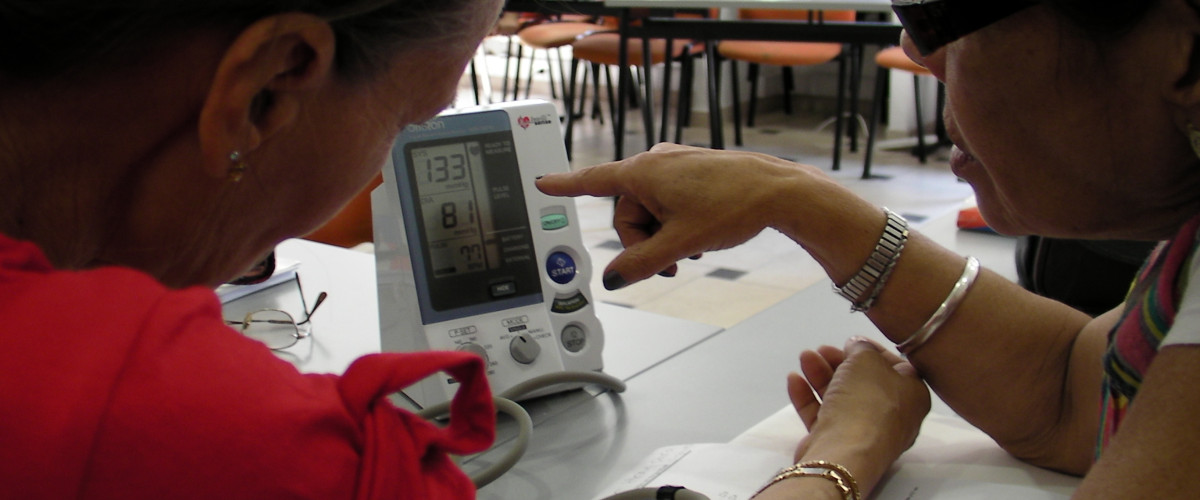
Tackling hypertension is crucial as it increases the risk of heart disease but can cause many other health problems such as brain and kidney diseases. Hypertension can be easily detected through monitoring blood pressure, at home or in a health centre, and can be controlled with low cost medications. A Lancet report concluded that although hypertension treatment and control rates have improved in most countries since 1990, there has been little change in much of sub-Saharan Africa and Pacific Island nations. Men and women in sub-Saharan Africa, central, south, and south-east Asia, and Pacific Island nations were least likely to be receiving medication. Treatment rates were below 25% for women, and 20% for men in 2019, in a number of countries in these regions, creating a massive global inequity in treatment.
How is GACD addressing the CVD burden?
CVD is a global public health concern with disproportionate socioeconomic, morbidity, and mortality burden in LMICs and in other vulnerable communities, including Indigenous populations. Since 2011, GACD has funded 59 research projects to tackle the burden of cardiovascular disease.
You can find out more about the GACD projects addressing hypertension by visiting our projects page,or you can take a look at the projects addressing scale up of interventions to tackle hypertension.
Would this content be useful for a friend or colleague?