
Research Programmes are comprised of members of the GACD Research Network who are funded under the same GACD grant call.
Research Programmes ensure that GACD funded projects have a synergistic impact, allowing researchers to better explore where, for whom, and under what circumstances NCD management and prevention strategies are effective. To date, there have been nine Research Programmes, corresponding with the nine completed funding calls.
-

More than half of the world’s population currently live in cities and this number is projected to rise to 68% by 2050. Air, water, and soil pollution; lack of greenspace; urban heat islands; lack of safe infrastructure for walking, cycling, and active living; and wide availability of tobacco, alcohol, and unhealthy foods and beverages drive the NCD epidemic in city environments. It is vital that we generate an improved understanding of how specific interventions can be better adapted to different city environments and/or scaled within and across cities, taking into account unique local social, ecological, political, economic, and cultural contexts.
In 2022, GACD launched it eighth funding call focusing on implementation research targeting chronic NCD risk factors associated with city environments.
-

Adopting a life course approach to NCD prevention and management is crucial for enhancing the health and wellbeing of people in low- and middle-income countries (LMICs) and underserved populations in high-income countries. By tackling the underlying causes of NCDs, we can proactively prevent their onset and enhance the quality of life for those affected.
In 2021, GACD launched its seventh funding call focusing on implementation research to reduce the NCD burden by targeting critical life stages and key transitions between life stages.
-

Cancer is becoming one of the most important public health problems worldwide and a leading cause of premature death. In 2018, an estimated 18.1 million people were diagnosed with cancer and 9.6 million died from it. Predictions suggest that 30 million people will die from cancer each year by 2030, of which 75% will be in LMICs.
In 2020, GACD launched its sixth funding call focusing on the primary and secondary prevention of cancer in LMICs and vulnerable populations in high-income countries (HICs). Please note that NIH continues to accept cancer prevention proposals.
-

To avoid significant and growing burdens on future populations, it is critically important to implement strategies that will prevent people from developing hypertension and diabetes and for improving the detection and management of these diseases once onset. Identifying and evaluating interventions to assess efficacy is not always enough to ensure their wide uptake in the real-world.
The fifth call for applications under the GACD banner focuses on scaling-up evidence-based interventions at the population level for the prevention or management of hypertension and/or diabetes.
-

Mental health is an integral part of health as underlined in the World Health Organization (WHO) definition of health as a ‘state of complete physical, mental and social well-being and not merely the absence of disease or infirmity’.
Mental disorders represent an ever-increasing burden, to all ages of the population, challenging mental health and health systems: global costs associated with mental disorders were estimated to be $2.4 trillion in 2010 and are expected to rise to $5.8 trillion by 2030.The fourth call for applications under the GACD banner focused on implementation research studies on child, adolescent and adult age onset mental health disorders in LMICs and/or in vulnerable populations in HICs.
-

The WHO estimates that there are 3.9 million deaths annually due to chronic respiratory diseases and COPD in particular. Tobacco is a key risk factor and over 80% of the world’s tobacco users live in LMICs.
GACD launched a call for proposals on the prevention and management of chronic lung diseases in 2015, with a focus on implementation research. GACD invested $60 million in 17 projects conducted in 33 countries.
-

In the past twenty years the global mortality rate from diabetes has doubled and the WHO predicts that this will increase by two thirds by 2030. It is currently estimated that 347 million people worldwide are living with diabetes, with more than 80% living in LMICs.
In 2013, GACD launched its second funding call on diabetes, with the emphasis on implementation of existing approaches to prevention and control of diabetes rather than development of new treatments.
-
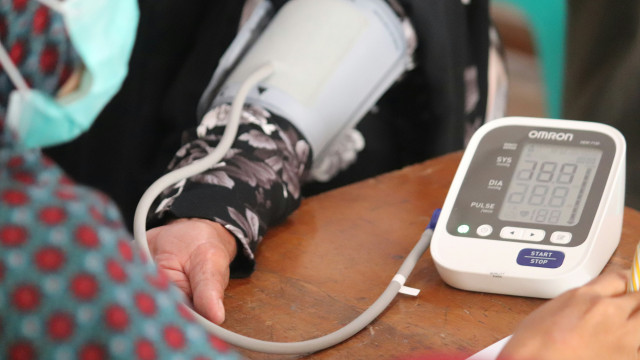
Hypertension is a major contributor to the growing global pandemic of cardiovascular disease and stroke. Poor control rates for hypertension and a lack of strategies to maintain normal blood pressure reflect the challenges of effective and affordable implementation in health care and other systems.
In 2011, GACD launched its inaugural funding call for implementation science projects addressing hypertension prevention and management in LMICs and underserved populations in HICs.
Would this content be useful for a friend or colleague?