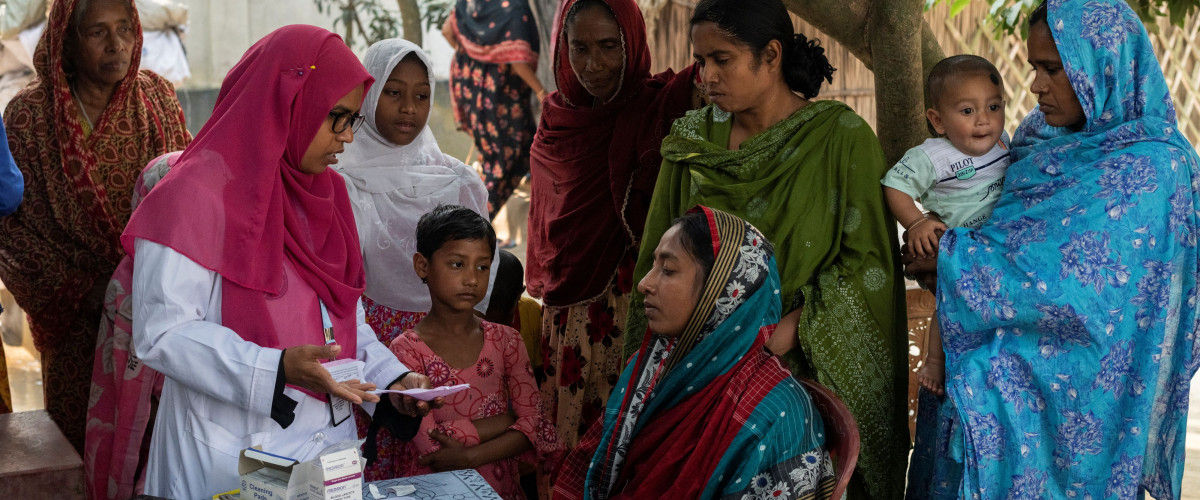
Communities are the ultimate users of healthcare research findings, and it is vital to support and engage them in the research process.
In GACD-funded research projects, community members include healthy recipients of prevention interventions, patients with existing NCDs, and their carers. They might also include community health workers or allied health professionals impacted by an intervention that changes how they work, such as through the adaptation of new technology.
All members of communities can bring important perspectives to the research team and articulate issues, research questions, and outcomes most important to them.
Below is a list of resources that discuss how to meaningfully involve communities in research projects. The context(s) in which the guidance is intended for use (i.e., high-income countries (HICs), low- and middle-income countries (LMICs) and/or Indigenous communities) are indicated.
-
Underserved communities in HICs
A practical guide to being inclusive in public involvement in health research
National Institute for Health and Care Research
This guide provides information on what researchers and organisations can do to enable a cultural change and lay the foundations for more inclusive involvement. The guide aims to inspire those involved in research to truly reach out to, and develop meaningful relationships with, a variety of communities.
-
LMICs
A resource guide for community engagement and involvement in global health research
Institute of Development Studies and the National Institute for Health and Care Research
Mobilising community members to participate in decision-making, planning, implementation and evaluation of programmes can empower marginalised groups to have greater control over decisions that most affect their lives. This resource guide discusses how to be intentional in incorporating underserved communities into global health research.
-
This guide provides suggestions for how to engage schools, religious institutions, non-profit organisations and community advocates in community-engaged research in order to achieve results applicable to the lives of community members.
-
This presentation from Dr Ruth Verhey, a clinical psychologist and implementation researcher, explores approaches to community participatory action research and empowering communities.
-
Indigenous communities
Australian National Health and Medical Research Council
Recognizing and respecting diversity throughout the research journey helps to initiate, develop and sustain partnerships and relationships with Aboriginal, Torres Strait Islander Peoples, and Indigenous people everywhere that are based on trust, mutual responsibility, and ethics. This guideline provides a set of principles for researchers to ethically include and engage with Indigenous communities.
-
Indigenous communities
Framework for research engagement with First Nation, Metis, and Inuit Peoples
University of Manitoba
For researchers interested in partnering with Indigenous communities, this guide can help with cross-cultural relationship-building and developing research practices that are fair, equitable and respectful of Indigenous knowledge and customs.
-
HICs and LMICs
Meaningfully involving people living with NCDs: What is being done and why it matters
NCD Alliance
People living with NCDs who share their lived experiences can help shape research and policies that directly affect them. This guide stresses meaningful involvement, the creation and fostering of reciprocal relationships with people living with NCDs, that ensures mutual benefit from research participation.
Would this content be useful for a friend or colleague?