- Project LC22 ( — )
- Life Course Research Programme
Colombia, Mozambique
Background
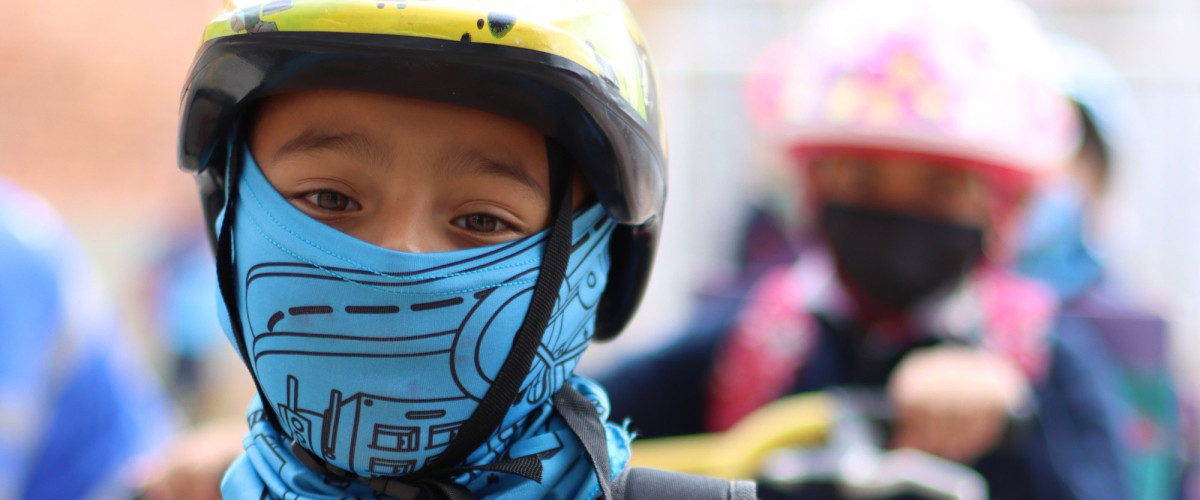
This three-year implementation research project will assess the acceptability and impact of active mobility to and from school interventions (AMTS) for promoting healthy lifestyle practices and mental well-being among secondary-school adolescents, aged 11 to 16 years. The project focuses on healthy lifestyle practices such as walking and cycling regularly to and from school as catalysts for the reduction of risks of non-communicable diseases (NCD). In doing so, the project will adopt a life course approach to implementation research underpinned by principles of diversity, inclusive stakeholder participation, and health equity. Such an approach will be instrumental in highlighting the health impact of active mobility policies targeting this critical life stage in different urban contexts in low and middle-income countries.
Aims
The project focuses on two (2) contrasting case studies in different global regions (Africa and Latin America), to shed light on the complexities and opportunities of the implementation, adaptation, and scalability of active mobility interventions, and the applicability of such interventions in a different social, cultural, economic, and governance context.
Project plan
First, we will assess specific implementation outcomes of two novel existing AMTS interventions in Bogotá, Colombia: (i) Al colegio en bici (Cycling) and (ii) Ciempiés Caminos Seguros (Walking). Second, using innovative citizen science methods, we will assess the impact of cycling and walking interventions on physical activity and mental well-being outcomes. Third, we will test the feasibility of a pilot implementation of a similar active mobility intervention among adolescents in disadvantaged urban communities in low-income and low-resourced contexts in Maputo, Mozambique, where despite a large share of children and adolescents walking to school, there are no explicit policies or programmes to support such practices. Fourth, building on diverse research and implementation partnerships, the project will establish equitable collaborations across sectors for capacity building and facilitating an international dialogue and knowledge exchange around implementation research, policy adaptation and effectiveness, and the reduction of NCD risks through the promotion of physical activity and mental well-being in active mobility interventions. The project is structured around four work packages (WP) addressing the above guiding objectives.
Publications and output
You may visit the project website for more information.
Funding organisations
Would this content be useful for a friend or colleague?