- Project DM07 (2015 — 2020)
- SMART2D - A people-centred approach through Self-Management and Reciprocal learning for the prevention and management of Type-2-Diabetes
South Africa, Sweden, Uganda
Low- and middle- income countries (LMICs) are disproportionately affected by diabetes, with around 80% of the adult diabetic population living in these countries. Prevalence is also increasing among socioeconomically disadvantaged populations in high-income countries (HICs).
Considering the numbers of people affected, effectively reaching those in need and managing those who are diagnosed presents challenges for health systems. Strategies for self-management of diabetes and support for healthy lifestyles have proven to be effective for both prevention and control of diabetes. Yet, implementation has been difficult.
One of the key barriers to implementing interventions that aim to help prevention and control of type 2 diabetes mellitus (T2DM) is a lack of knowledge and understanding of the environments in which they are to be used and how these in turn modify any interventions that are implemented.
Furthermore, interventions that have been developed in a high-income setting are not likely to work in LMIC settings without adaptation. Therefore, there is a need for context-related knowledge prior to intervention adaptation and implementation.
The award
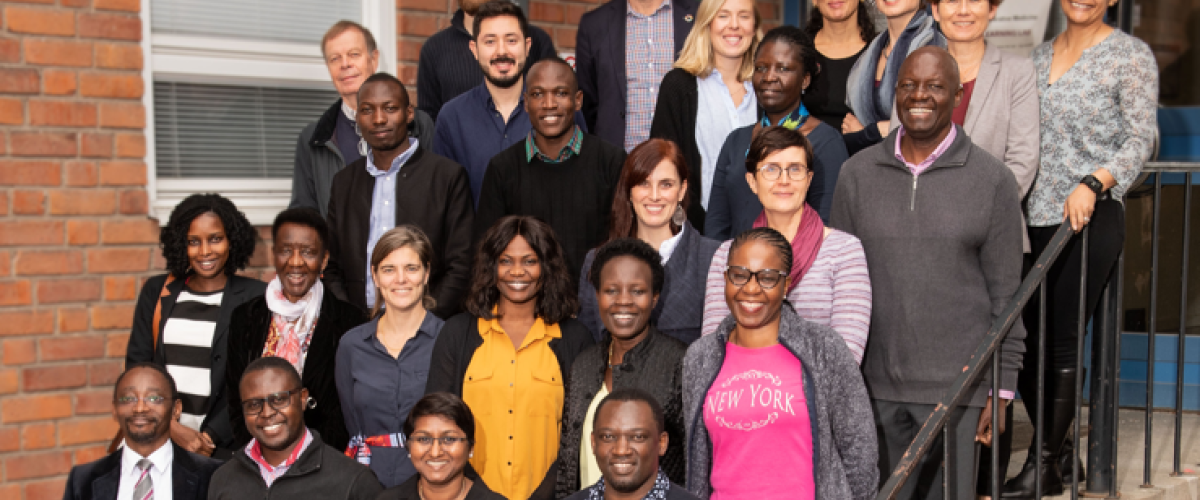
The SMART2D grant, funded by the European Commission, aimed to implement self-management support for T2DM prevention and management in three different settings (Uganda, South Africa, and Sweden). The project was led by Associate Professor Meena Daivadanam (Uppsala University & Karolinska Institutet, Sweden) and involved researchers from Uganda, South Africa, Finland and Belgium.
The intervention involved combined community and health facility strategies to enable self-management; however, it was adapted for each setting according to its specific needs and context. Stakeholders, including policy makers, implementers, representatives of the community, and diabetes associations, were engaged in the project from the outset.
Key findings
Results suggest that the addition of a community support component was beneficial for people with pre-diabetes in Uganda, rather than for those who already had the disease. Challenges related to implementation of the intervention and high mobility of the target group influenced outcomes in South Africa. The feasibility trial in Sweden was found to improve reach among hard-to-reach populations through community-based screening.
Thus, SMART2D has generated knowledge regarding implementation of T2DM interventions in each of the settings. The project has also facilitated research capacity building among early career researchers. Other project outputs included publications, PhD theses, conference proceedings and TV and media coverage.
Next steps
Two applications are currently pending with the Swedish Research Council for follow-up studies in Uganda and Sweden. In the meantime, project findings have been disseminated to policy, health care and community stakeholders in Uganda, South Africa and Sweden, and two policy briefs (one each for people with pre-diabetes and diabetes) are being drafted for the Ugandan Ministry of Health to inform national diabetes policy.
Full case study: Self management for the prevention and management of Type 2 Diabetes
Would this content be useful for a friend or colleague?