
- Project SU02 (2019 — 2023)
- SUNI-SEA - Scaling-up NCD Interventions in South East Asia
Indonesia, Myanmar, Vietnam
As one of the world’s rapidly ageing populations, Vietnam faces many challenges in community healthcare, especially regarding noncommunicable diseases (NCDs), despite its relatively low per capita income.
In 2019, NCDs accounted for 73.7% of Vietnam’s total disease burden and mortality nationwide. In response, the Vietnamese government has diligently developed a comprehensive national strategy to address the escalating prevalence of NCDs, emphasizing the critical roles of primary healthcare (PHC) facilities and active community engagement in improving individuals’ access to NCD care.
Among NCDs, hypertension and diabetes mellitus are the most prevalent chronic illnesses. However, rates of detection, treatment, and access to healthcare services for managing these conditions remain notably restricted. According to the Ministry of Health in Vietnam, a significant portion—up to 56.9% of those diagnosed with hypertension and nearly 70% with diabetes mellitus remains undiagnosed. Only 13.6% of those diagnosed with hypertension and 28.9% of those diagnosed with diabetes mellitus are managed at healthcare facilities. Given this scenario, the imperative lies in the development and expansive adoption of community-based care models, which represent a crucial strategy in extending the reach of NCD treatment within the community.
The basic concept is that shifting hospital-based care for NCDs to community-based health promotion and screening combined with primary healthcare-based early diagnosis and treatment is effective and saves costs. It will improve quality of life of citizens, increase productivity of society and save costs for medical care for complications related to NCDs.
The SUNI-SEA team in Vietnam analysed the needs of the country for enabling the comprehensive approach for community health and primary healthcare and developed an action plan for four target groups as shown in the figure below.
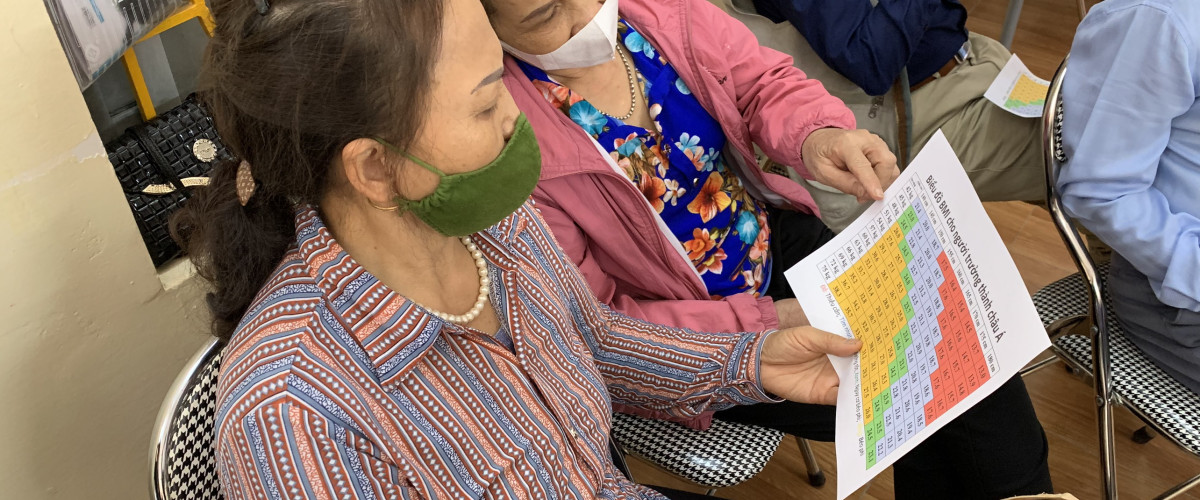
In Vietnam, a community-based intervention model has been put in place. It promotes a coordinative and collaborative approach between Commune Health Stations (CHSs) in communes, wards, and towns and Intergenerational Self-Help Clubs (ISHCs) in hypertension and diabetes mellitus prevention and management activities. ISHCs are equipped with the knowledge and skills to conduct bi-annual screening for hypertension and diabetes mellitus risk factors, provide health education, classify risk levels, and refer individuals at high risk to healthcare facilities. The clubs promote healthy lifestyles and self-care practice of their members.
Health staff from primary healthcare facilities, specifically CHSs and district health centres (DHCs), are trained to enhance their knowledge about hypertension and diabetes mellitus. The facilities strengthen their connection with ISHCs through screening and communication sessions about NCDs, held at the clubs. They also receive high-risk community members who are advised by the ISHCs to consult a health facility and provide diagnosis and regular management for those with a confirmed diagnosis.
The Vietnam National and Provincial Associations of the Elderly, a semi-governmental organisation supported by HelpAge International in Vietnam, engaged with the Department of Health from the outset of the project to propose the collaboration to strengthen support for health care activities in ISHCs. In August 2022, the Ninh Binh Association of the Elderly and the Department of Health officially signed a Joint Collaboration Agreement outlining specific roles and tasks, aiming to scale up the healthcare activities for ISHC members and other community members. The agreement includes commitments to provide screening, health education, and monthly monitoring for NCD risk factors. The Ninh Binh Association of the Elderly also partnered with the Department of Population and Family Planning for communication sessions at the ISHCs, organising media events and resource mobilisation from the private sector. A short video shows the activities in NCD prevention and control and the agreements made to scale up the model.
There are still gaps that need to be addressed. For primary healthcare facilities, coordination will be more effective if financial mechanisms are put in place to encourage health workers to strengthen screening, prevention, and management of NCDs in their community. Access to medicines to treat hypertension and some co-morbidities must be improved. At the national level, negotiations for a Joint Collaboration Agreement between Vietnam Association of the Elderly and Ministry of Health are necessary to promote practice in the communities and are ongoing. At the community level, formal connections between ISHCs, the Association of the Elderly and the health sector must be established.
SUNI-SEA presents a future outlook in a policy brief. This brief presents the synergy model in Vietnam, intervention activities and results, gaps in the implementation and recommendations to strengthen synergies between primary healthcare providers and communities for the prevention and control of hypertension and diabetes.
Would this content be useful for a friend or colleague?