- Project DM04 (2014 — 2022)
- Diabetes Research Programme
Philippines
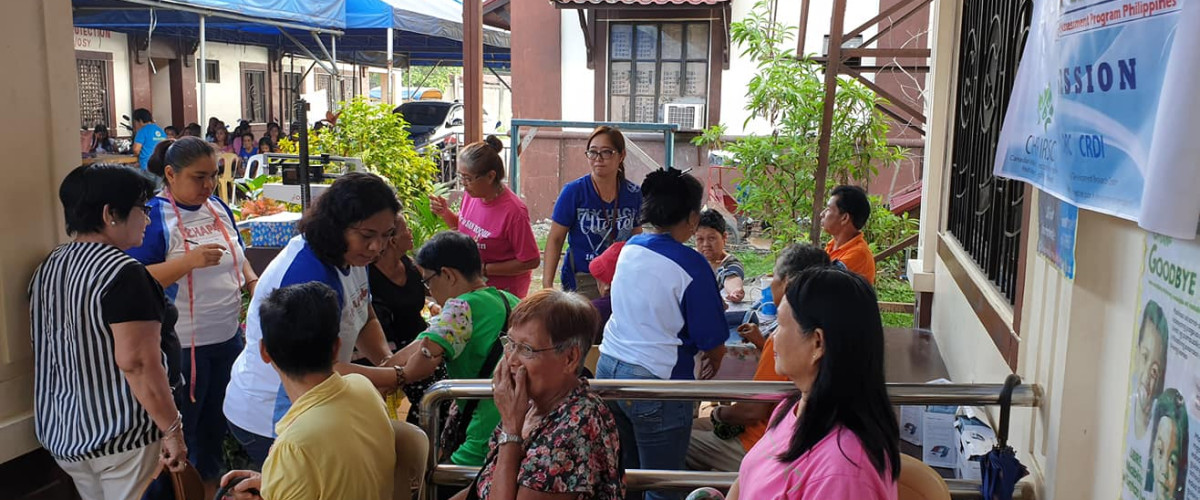
A community-based programme in the Philippines that adapted the Canadian CHAP model to reduce diabetes and cardiovascular risk in low-resource settings.
Project contact
- Ricardo Angeles rangele@mcmaster.ca
Background
This 5-year study aimed to adapt the Canadian-based Cardiovascular Health Awareness Program (CHAP) to a low- to middle-income country (LMIC) setting as the Community Health Awareness Program in the Philippines (CHAP-P) and determine the effect of CHAP-P on the HbA1c of residents from selected communities of the Zamboanga Peninsula, Philippines.
Aims
Primary aim:
To adapt the elements of the expanded Cardiovascular Health Awareness Program (CHAP) intervention model to low- and middle-income countries (LMICs) and evaluate its effectiveness in preventing diabetes and its complications.
Secondary aims:
To foster uptake of findings from the CHAPP program to other organizations and groups in the Philipines and other LMICs.
To identify optimal ways to adapt elements of the CHAP model to fit local LMIC conditions (sociocultural, economic, environmental) while focussing on the prevention and management of diabetes.
To evaluate the effectiveness, feasibility/acceptability, and cost-effectiveness of the CHAPP intervention for use in rural communities in LMICs
Project plan
A mixed-methods approach in multiple phases.
Phase 1 – a qualitative study adapting the program to the sociocultural and economic setting.
Phase 2 – a series of pilot studies.
Phase 3 – a parallel cluster randomized controlled trial (RCT);
Phase 4 – data interpretation and knowledge translation.
Impact
The project demonstrated that the CHAP-P intervention was an acceptable and feasible community-based primary care programme to decrease cardiovascular and diabetes risk in the communities in the Philippines, although the team noted that the effectiveness of the intervention varied according to the community context. The CHAPP programme is being scaled up across an entire region in the Philippines with contributions from the local governments in the scaling-up process. The programme itself is also used as part of the Philippine Government’s WHO package of essential noncommunicable (PEN) disease interventions for primary health care in low-resource settings.
Publications and output
To access publications and other outputs relating to this project, see our publications webpage.
GACD have also published an end-of-programme report, providing a comprehensive summary of the programme and outcomes. More information about the Diabetes report is available here.
The CHAPP Team produced a video explaining the project, which is available to watch here.
CIHR published an article about the project Preventing diabetes overseas: Canadian researchers bring successful health awareness program to the Philippines.
You can also visit the CHAPP project website for more information.
This project has a related case study Scaling up the Community Health Assessment Program in the Philippines (CHAP-P): Preventing hypertension and diabetes through primary healthcare.
Principal investigators
-
Fortunato Cristobal Ateneo de Zamboanga University School of Medicine, Philippines
-
Lisa Dolovich McMaster University, Canada
-
Gina Agarwal Ateneo de Zamboanga University School of Medicine, PhilippinesCanada
-
Janusz Kaczorowski University of Montreal, Canada
Team members
-
Dale Guenter McMaster University, Canada
-
Karl Stobbe McMaster University, Canada
Funding organisations

Would this content be useful for a friend or colleague?