- Project LD13 (2016 — 2020)
- Lung Diseases Research Programme
Bangladesh
Background
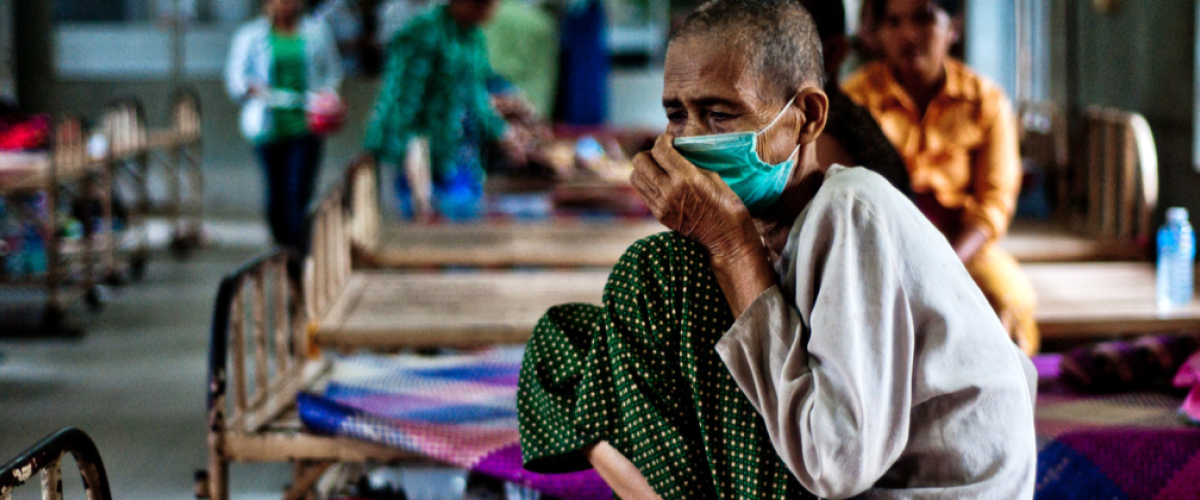
Second Hand Smoke (SHS) contains 4,000 toxic chemicals and is a serious health hazard to non-smokers. Every year, an estimated 600,000 people die and 10·9 million disability-adjusted life years (DALYs) are lost due to SHS exposure, worldwide. A significant proportion of this disease burden (40% deaths and 70% DALYs lost) is due to lung diseases i.e. asthma, chest infections and lung cancer. Women and children are worst affected; 47% of deaths from SHS exposure occur in female adults and 28% in children. SHS increases children’s risk of acquiring lower respiratory tract infections, tuberculosis, and incident cases, recurrent episodes, and increased severity of asthma. Parental smoking is also associated with their children’s admissions to hospital. Children living in smoking households are at high risk of becoming adult smokers later.
Aims
Our overall aim was to reduce the burden of disease due to SHS in LMICs by discovering innovative community-based approaches to behaviour change.
Project plan
To assess the effect of a community-based intervention – Smoke Free Homes (SFH), with or without Indoor Air Quality (IAQ) feedback on;
non-smokers’ exposure to SHS in the home (primary outcome),
the frequency and severity of respiratory symptoms,
healthcare service use, and
quality of life.
To assess the cost-effectiveness of SFH, with or without IAQ feedback in reducing nonsmokers’ exposure to SHS in the home.
To identify the modifications required in SFH and IAQ feedback in order to make it culturally appropriate, feasible, and acceptable for families and Imams in Bangladesh.
To assess what competencies and organisational capacity are required for Imams and in mosques, respectively, to deliver SFH.
To identify the mechanism (e.g. participants’ level of engagement, acceptability and perceived benefits/harms) and the contextual factors (social, economic, environmental and political) that are likely to influence the impact of SFH and IAQ feedback.
To estimate the likely costs and effects of scaling up SFH with or without IAQ feedback
To develop a simple monitoring framework, which could be efficiently employed as the intervention(s) are scaled up.
To identify the likely obstacles to and opportunities for implementing and scaling up the intervention(s) and how best to work with communities and policy makers to overcome the obstacles and maximise the opportunities.
Impact
The project showed that delivery of the smoke free homes intervention at the community level was not cost effective. Learning from the project was used to modify the intervention for further research.
Publications and output
You may visit the project website for more information.
Funding organisations
Would this content be useful for a friend or colleague?