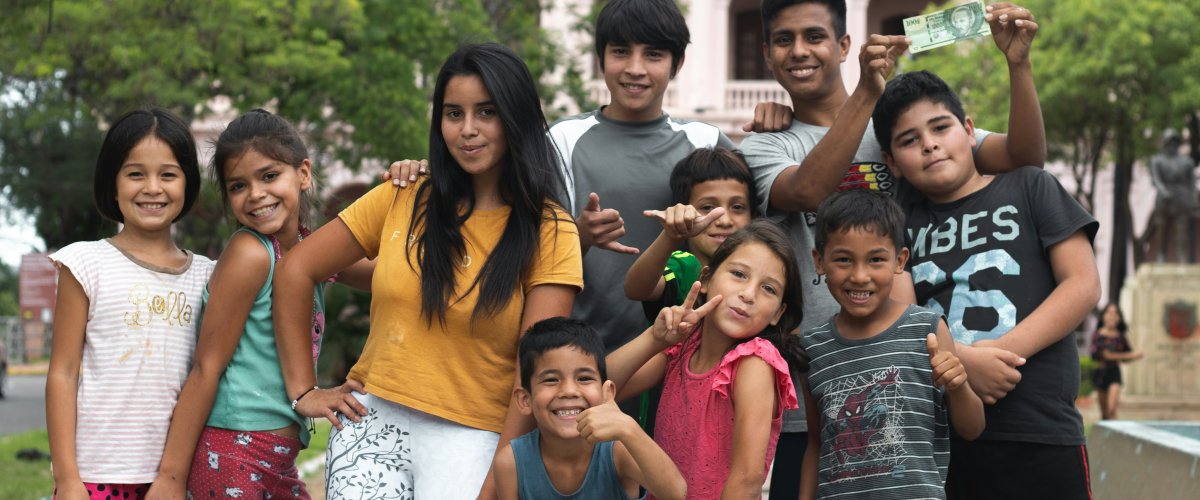
A research funding call focused on implementation research to address the growing burden of NCDs among children and young people
Call focus
The 12th GACD research funding call focuses on implementation research of interventions targeting children and young people to tackle the increasing burden of non-communicable diseases (NCDs) in low-and middle-income countries (LMIC: as defined by the world bank) and children and young people populations experiencing inequity in high-income countries (HIC).
The remit of this call covers implementation strategies around prevention, screening and management of NCDs, centered on the critical life stages, from early childhood to young adulthood (age 1-24).
Challenge
Up to 70% of preventable adult deaths from NCDs are linked to risk factors originating in childhood and adolescence. Childhood and adolescence are critical periods, when behaviours associated with NCD risk are adopted including tobacco use, alcohol use, substance abuse, unhealthy diets and the consumption of ultra-processed foods, adoption of sedentary lifestyles, and children and young people often being targeted by commercial marketing of unhealthy products.
Applying for the joint funding call
This twelfth GACD joint funding call offers two routes to submission and review depending on the funding agencies involved. The joint submission and review process will have two stages. Applicants will first submit to provisional Stage 1, and the eligible applications will undergo expert peer review. The applicants will receive feedback from this initial review. Successful applicants will then be invited to full Stage 2 submissions, which will be re-assessed by the GACD Joint Peer Review Panel.
Those funding agencies running parallel calls under the GACD umbrella have their own submission and review processes. These will differ from, and run separately to, the GACD joint peer review process. The European Commission for example is running a single stage funding call as a parallel process.
Eligibility
Applicants must apply to the specific GACD funding agency/ies participating in this call according to their conditions. GACD funding agency members do not pool their funds together. Applicants must therefore ensure that they are eligible to receive funds and that their proposed projects meet all requirements of at least one of the funders participating in this call.
Key documents and resources
Parallel process
European Commission / Horizon Europe runs a GACD-related Children and Young people call (HORIZON-HLTH-2027-01-DISEASE-10), with a single-stage application process and a lump-sum award. The call submission opened on 29 October 2026 and will close on 17 February 2027.
If you have questions regarding EC/HE eligibility and other requirements you may wish to contact your country’s National Contact Point and check Horizon Europe Work programme 2026-2027 – General Annexes.
The US National Institutes of Health: the call is under development.
Joint Process
-
Stage 1 opening for submissions - 11 January 2027, Monday
Information session for applicants - January - February 2027, TBC
Stage 1 Deadline for submissions - 14 April 2027, Wed
Notice of Decision (Stage 1)/Stage 2 invitation - July 2027
Application deadline (Stage 2) - 24 August 2027, Tue
Notice of Decision (Stage 2) - December 2027 - March 2028
-
Australia – National Health and Medical Research Council (NHMRC)
Canada – Canadian Institutes of Health Research (CIHR)
India – Indian Council of Medical Research (ICMR)
South Africa – South African Medical Research Council (SAMRC)
Thailand – Health Systems Research Institute (HSRI)
-
TO BE UPDATED
-
TO BE UPDATED
Find a Collaborator Tool
Teams should be diverse and multidisciplinary. Teams are encouraged to ensure gender and geographical balance in leadership. The GACD expects that project teams will exhibit fair and equitable collaboration, especially between HIC – LMIC and non-Indigenous – Indigenous partners.
A match-making tool has been created for applicants, to facilitate collaboration and team building:
The tool can be used for both:
Partners looking for projects: As individual researcher, policymaker, community representative or other relevant stakeholder, searching for a project to join.
Projects looking for partners: If you want to build a consortium around an existing project and want to find partners for your project or require specific expertise on the team.
The find a collaborator tool is available here.
Questions and Queries
You can contact funding@gacd.org with any questions about this funding call.
You can subscribe to our mailing list to receive updates about this and other GACD funding calls, including updates when new funders join this call and when we have finalised the date for the application guidance webinar.
-
All application materials must be submitted in English unless otherwise noted. However, we anticipate that project teams may include non-English speakers that play a critical role in planning the research project.
There are links to external websites in English throughout this webpage. You may need to view this webpage in its original English to access these links. To translate the material presented on linked websites, please open them in Google Chrome. If you are in a non-English speaking country, you should automatically be given the option to convert the text into your local language.
To translate materials in documents linked to this webpage:
Download the document
Click ‘Documents’ in the upper left hand corner
Select your preferred language
Upload the document
Click translate
Please note that materials translated by Google typically have errors. E-mail addresses in particular may be corrupted if translated; please always use the e-mail address provided in the original document or webpage. We highly recommend that you work with a fluent English speaker when preparing your GACD application materials to ensure that you comply with all GACD eligibility requirements and that the peer reviewers can easily understand and evaluate your application.
Would this content be useful for a friend or colleague?