
- Project CP10 (2021 — 2024)
- PRESCRIP-TEC: Prevention and screening Innovation Project – Towards Elimination of Cervical Cancer
Bangladesh, India, Slovakia, Uganda
With an estimated 604,000 new cases and 342,000 deaths worldwide in 2020, cervical cancer is the fourth most frequently diagnosed cancer and the fourth leading cause of death from cancer among women.
Cervical cancer remains a global health challenge. With an estimated 604,000 new cases and 342,000 deaths worldwide in 2020, cervical cancer is the fourth most frequently diagnosed cancer and the fourth leading cause of death from cancer among women. Most cases and deaths occur in low- and middle-income countries (LMICs).
Infection with high-risk human papillomavirus (hrHPV) is the main risk factor for the development of cervical cancer. HrHPV testing offers higher sensitivity compared to Visual Inspection of the cervix with Acetic acid (VIA) and cytology. The option of self-sampling for hrHPV testing has the potential to increase uptake of cervical cancer screening through reducing socioeconomic, cultural and logistical barriers to participation in screening. The World Health Organization (WHO) recommends hrHPV testing (either self-sampled or provider-collected) as the primary screening test.
The Prevention and Screening Innovation Project – Towards Elimination of Cervical Cancer (PRESCRIP-TEC) was developed in alignment with the WHO strategy for eliminating cervical cancer. Aimed at providing evidence for the feasibility of this strategy and supporting the WHO call to action, the initiative was implemented in Bangladesh, India, Uganda, and the Slovak Republic from February 2021 until January 2024, with continued efforts in India until November 2024.
The project used hrHPV testing through self-collected sampling as the primary screening tool, followed by VIA in Asia and Africa, or Pap smear cytology in Europe. There was a direct treatment of pre-cancerous lesions or referred women for further treatment if needed. The team also validated an Artificial Intelligence Decisions Support System (AI-DSS), which aimed to reduce inter- and intra-observer variation in VIA. A communication strategy was developed to sensitise women to perform HPV testing and attend follow-up screening if needed.
The project performed studies to analyse individual and health systems factors contributing to uptake of the screening and performed a cost effectiveness analysis.
To raise awareness and encourage women to perform HPV testing and attend follow-up screenings, a comprehensive communication strategy was developed. Studies were conducted to analyze individual and health system factors affecting screening uptake, and a cost-effectiveness analysis was performed.
Community sensitisation has been implemented, by reaching out to local decision makers, health officials, local government organisations, as well as individual women and men through meetings, personal contacts, and social media. Government organisations were closely involved in the development and implementation of the project. There was also close contact with the International Agency for Cancer Research to share experiences.
The Artificial Intelligence Decision Support System (AI-DSS) device has been validated in India, Bangladesh and Uganda. The key numbers of performance of the project are summarised in a fact sheet and in the final conference. A short video shows the achievements.
Important lessons learnt from the PRESCRIP-TEC project are:
Understand the local context
The HPV prevalence rate varies considerably from 2% in rural Asia, to 6% in Europe and over 20% in Africa. Prevalence is even higher in specific groups and is around 30% in women living with HIV (WLHIV) or sex workers. This means that the public health problem is not equally spread globally. When it comes to priority setting, it may be relevant to start with specific groups in countries (WLHIV and sex workers) and high-prevalence countries first, when addressing the elimination of cervical cancer as public health problem.
Research in PRESCRIP-TEC showed that decision-making about participation in cervical cancer screening in many cultures is not with the women (alone), but often together with family members, especially husbands or mothers-in-law. In the poorest and lowest educated groups other decision-makers in the household may even decide instead of the women involved. In communication about the importance of cervical cancer screening it is essential to approach the decision-makers in the household as well. Especially in remote rural areas establishing personal contacts, using traditional means of communication, is the best way to sensitise women and their families.
Innovate approaches in using hrHPV tests
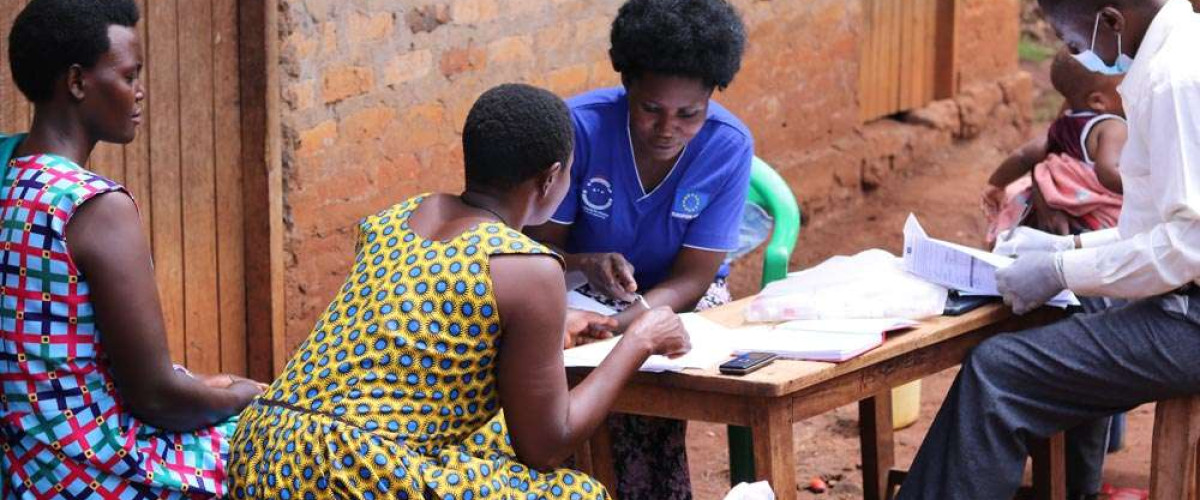
The home-based self-collected hrHPV test is a very successful approach for achieving high uptake of cervical cancer screening. The project reached over 90% uptake of tests. In all four countries, PRESCRIP-TEC engaged community volunteers for distributing and collecting tests. The engagement of community health volunteers, who are trusted, and who are part of the community, helps to convince women to take the test. Their work can reduce the workload of professional health workers.
Although hrHPV testing is the preferred option as initial cervical cancer screening test, at this moment in time, it is difficult for most low- and middle-income countries to implement this screening tool in primary healthcare (PHC). hrHPV testing requires laboratories which are too sophisticated for resource-constrained settings (electricity, constant temperature, qualified staff). In addition, the present test is too expensive to be affordable for most countries. The prices of hrHPV tests must come down considerably, to less than US$ 15 per test. There is a challenge for the industry to develop a cheap point-of-care HPV test, in analogy of the HIV test that has been developed. Only under these conditions of cheaper and easier testing, national HPV screening programmes are feasible.
Follow-up after hrHPV testing
The follow-up by VIA or Pap-smear after initial HPV testing is important for early detection of pre-cancerous lesions. The PRESCRIP-TEC achieved a 70% follow-up. Follow-up requires women to come to a PHC facility, and is more demanding, in terms of time and costs. Financial barriers were important obstacles, especially in poorer families, where the husband or mother-in-law decides. It is therefore important to improve access to primary healthcare.
Direct treatment when pre-cancerous lesions are found during VIA, is important. It saves women time and costs. This ensures a high uptake of treatment of pre-cancerous lesions. However, it means that all clinics where cervical cancer screening is performed, must be equipped with machines for ablative treatment. This requires an investment, and supplies, as well as maintenance costs. In the PRESCRIP-TEC project the costs were around US$ 5 per women treated.
Invest in technology
Artificial Intelligence Decision Support System during VIA is a promising technology. The project has shown that it is feasible under resource-constrained settings. However, it requires good training of staff, as taking high quality pictures suitable for the AI algorithm is not easy. The validation of the algorithm developed by Manipal Academy of Higher Education in India is not yet concluded, but with further developments AI will contribute to quality assurance and task shifting in cervical cancer screening.
Improve knowledge and skills of health workers
For cervical cancer screening programmes, it is important to have qualified staff in place, capable of performing VIA (or Pap smear). VIA is an investigation with high intra- and inter-observer variation, and therefore should be performed by personnel with experience and practical knowledge. Turn-over of staff in some of the PRESCRIP-TEC research sites affected the quality of VIA. If the screening is integrated into regular health services, regular supervision should take place, and regular refresher courses are important. PRESCRIP-TEC has developed a set of (on-line) learning modules available on the website. With the current technology remote consultation by gynaecologists is an option, as was applied in the project. Quality assurance is important in the cervical cancer screening programme.
WHO strategy
The WHO cervical cancer screening strategy is cost-effective in terms of life years saved, but not affordable for most low- and middle-income countries. Therefore, costs must come down. This can partially be achieved by economies of scale once screening is implemented country wide. Once it is implemented at a large scale, unit costs will come down. Costs of community sensitisation can be reduced when screening is fully integrated in regular healthcare, and the population is more knowledgeable (demand creation). Community health volunteers are very helpful and relatively cheap in the strategy. As mentioned above, cheaper costs of HPV tests will contribute to affordability as well. Eventually, the AI-DSS can contribute to cost reduction by task shifting.
Would this content be useful for a friend or colleague?