- Project HT04 (2012 — 2015)
- A school-based education program to reduce salt intake in children and their families
China
High salt intake is a major factor in heart disease and stroke; even a modest reduction in salt intake has been shown to lower blood pressure and reduce the risk of cardiovascular disease.
The World Health Organization has recommended reduced salt intake in food as one of the ‘best buy’ interventions to tackle the global crisis in non-communicable disease and WHO Member States agreed on a voluntary global non-communicable diseases (NCD) target for a 30% relative reduction in salt intake by 2025.
The award
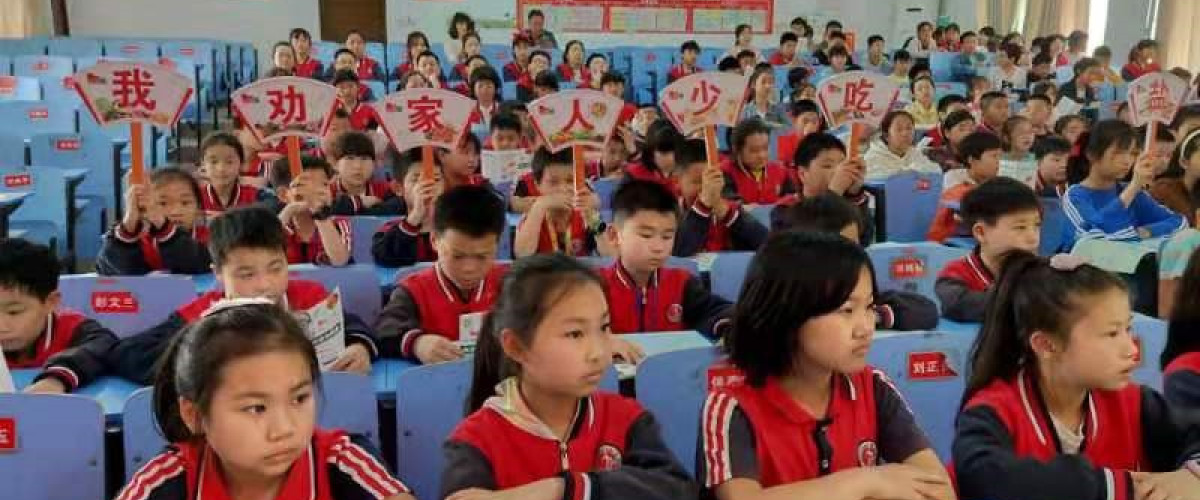
The School-EduSalt study tested a novel approach to lowering salt intake, focussing on children in primary school education in China.
School-EduSalt’s rationale was that children who learn about the harmful effects of excessive salt intake will tell their families about the problem and persuade parents and grandparents to reduce the amount of salt used in food preparation.
It tested if school health education lessons focusing on salt intake reduction over a 3.5-month period could reduce families’ salt intake and lower blood pressure.
The study was conducted in 28 primary schools in Changzhi, a city in northern China by a team of researchers from Queen Mary University of London, The George Institute for Global Health, Beijing (TGI), Peking University and Changzhi Medical College.
It was funded through the 2011 GACD call targeting hypertension (2012-2015; £761,888/US$1.17m, funded by the UK Medical Research Council).
Key findings
The trial found that educating primary school children was successful in reducing salt intake by around 25%, in both children and their parents, accompanied by a significant decrease in the adults’ blood pressure.
The researchers estimated that this decrease could reduce the incidence of stroke by about 9% and ischaemic heart disease by about 5%, preventing around 153 000 deaths from stroke and 47 000 deaths from ischaemic heart disease a year in China.
The findings were published in the British Medical Journal in 2015.
Next steps
The researchers continued work on a salt intake reduction action plan for China, collaborating with national government organisations. The School-EduSalt education package was expanded to include an application-based programme (AppSalt) as part of the UK-China Collaboration Unit Action on Salt China (2017-2021), funded by the UK National Institute for Health Research (NIHR). While the full analysis is still under way, preliminary results are encouraging.
The team then secured further funding through the GACD Scale-up call (2019-2023; £2.5m/US$3.16m, UK MRC and NIHR). Currently in its early stages, the project will test whether the educational programme can be successfully delivered across multiple settings in China, involving at least 100 schools and covering a population of 3.2m (1.1m children and 2.1m adults). If successful, the intervention will be rolled out nationwide.
School-EduSalt is also informing efforts to reduce salt intake elsewhere. Modelled on the EduSalt trial, a research team is carrying out a salt reduction study in Malawi, the ‘NoToNa’ study, funded by the UK MRC.
Full case study: Reducing salt intake through a school-based education programme in China
Would this content be useful for a friend or colleague?